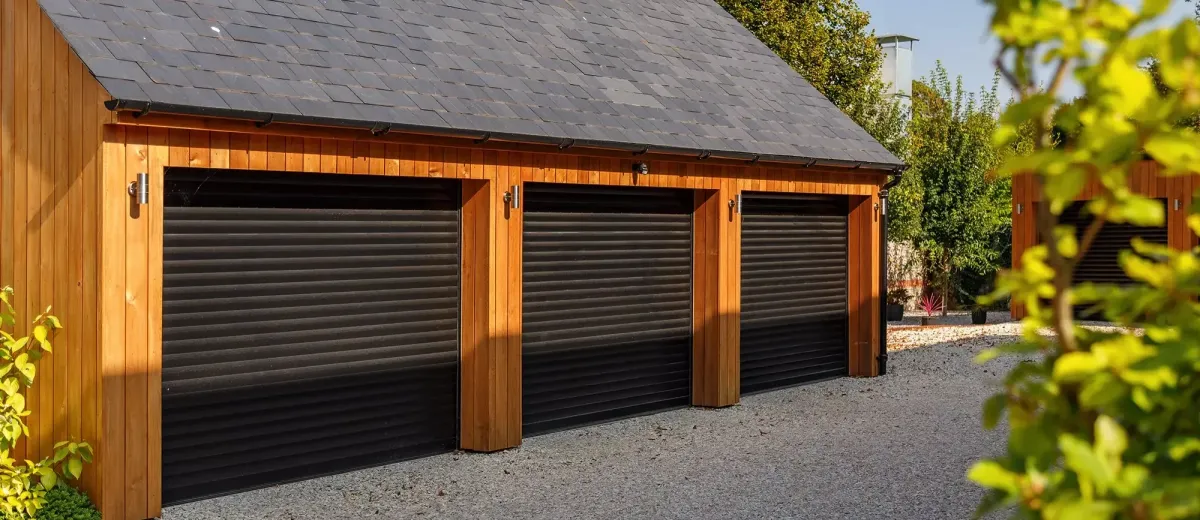
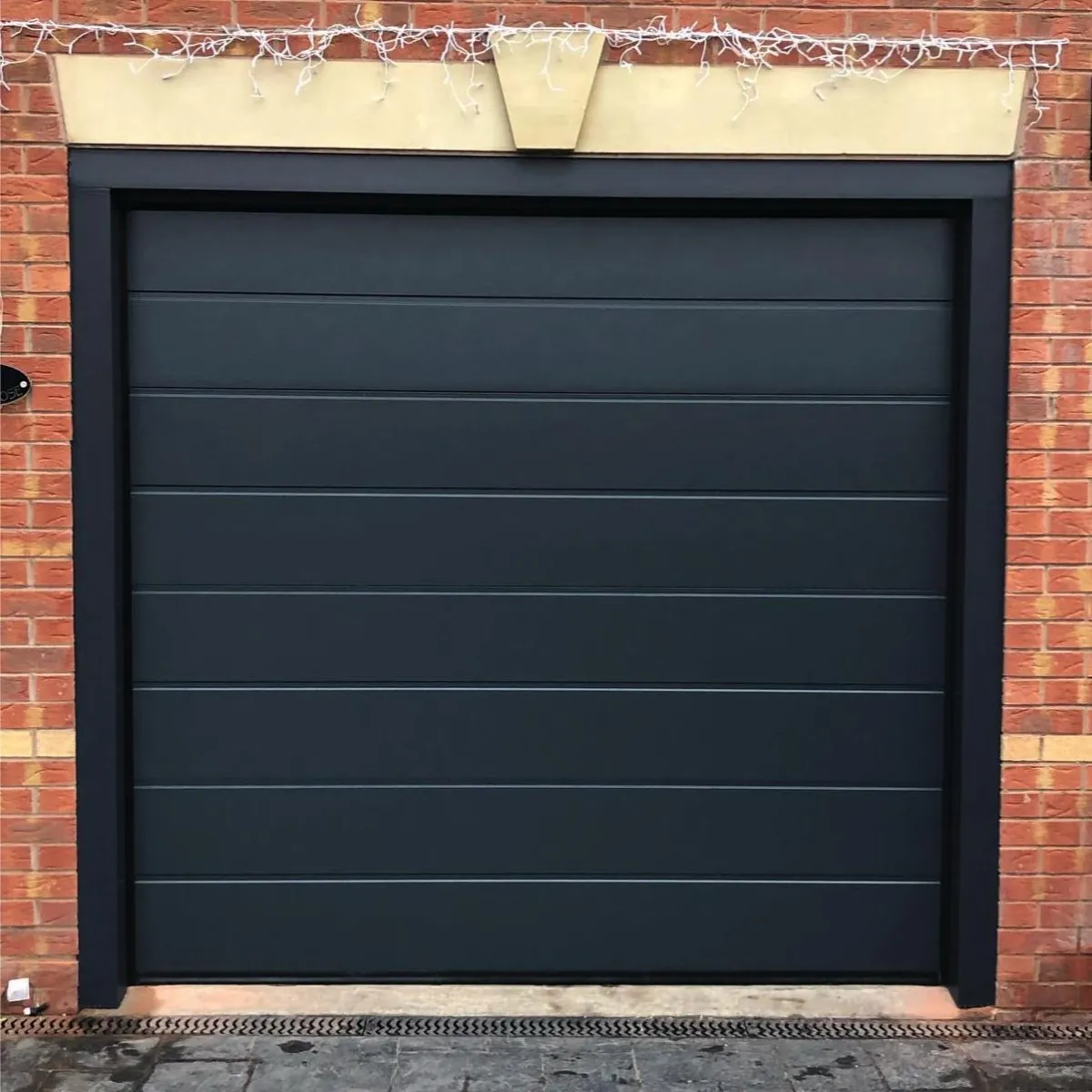
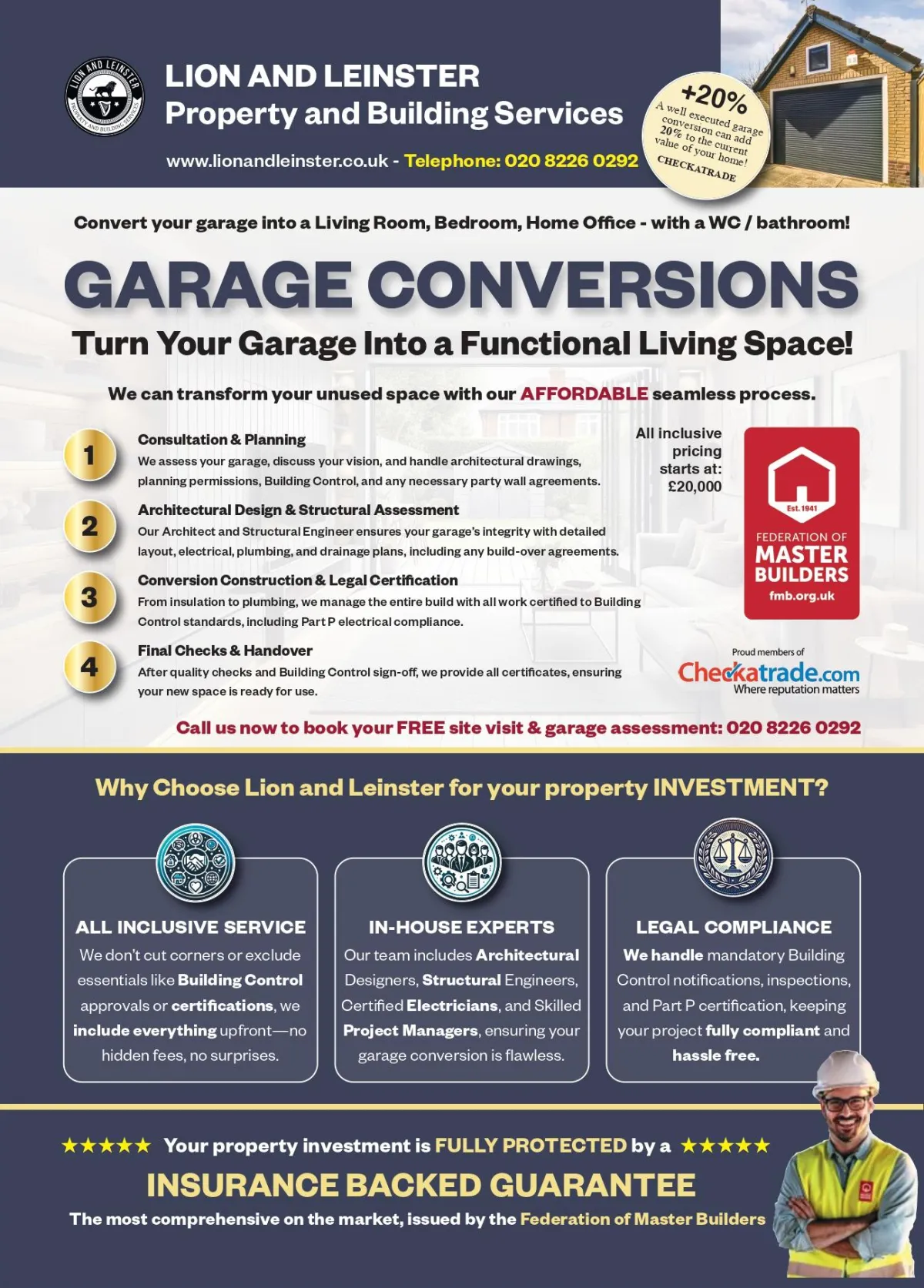
At Lion and Leinster Property and Building Services, we’ve observed a rising trend in garage conversions, largely because many homeowners find that their garage space is underutilised. Instead of being used for vehicle storage, garages can be transformed into valuable living areas, making this one of the simplest and most cost-effective ways to enhance your home.
In many cases, you won’t need planning permission to convert your garage. However, it’s always best to confirm with your local planning authority. Most conversions of integral garages are covered under ‘permitted development rights’, meaning you can proceed without a formal planning application. There are exceptions, though. If your home is in a designated area such as a Conservation Area, Area of Outstanding Natural Beauty, or a National Park, or if your property is listed, planning permission or Listed Building Consent may be required.
It’s also wise to check if there are any existing planning conditions that might restrict garage conversion. Some properties come with conditions requiring the garage to be retained as a parking space, in which case you would need to apply to have these conditions removed. Although not mandatory, obtaining a lawful development certificate is a smart move. This document serves as proof that your conversion adheres to planning regulations, which can be especially important when selling your property.
If your project falls under Permitted Development, this certificate can confirm compliance with the necessary conditions. For detached garages or those undergoing significant alterations such as extending the structure, raising the roof, or adding larger windows, planning permission or a change of use application may be needed.

When planning your garage conversion, there are several key factors to consider. Discussing these with your builder can help clarify the potential of your space, set realistic timelines, and provide an accurate cost estimate. Key areas to address include;


Selecting a reputable builder or garage conversion specialist is crucial to ensure a high-quality finish. At Lion and Leinster, we recommend using trusted resources to find qualified professionals who have been thoroughly vetted. Whether you need a designer for your garage conversion depends on the complexity of your project and your budget. At Lion and Leinster, we offer several options:


Converting a garage is classified as a change of use, so it’s essential that the project complies with current building regulations. Whilst your builder should be knowledgeable about these requirements, your local building control department can provide comprehensive details.


The duration of a garage conversion varies depending on its complexity and the scope of work. Projects requiring significant structural changes or planning permission will take longer to complete. The intended use of the converted space, such as adding a kitchen or bathroom, can also extend the timeline.
A typical schedule of work would follow the plan below;
If your conversion includes a kitchen or bathroom, additional work will be required, extending the project’s duration.
If you’re managing the conversion yourself, ensure you have adequate conversion insurance to cover both the ongoing work and your existing property. This should include materials, tools, equipment, and public liability. If you’re using a builder, verify that they have appropriate insurance to cover the project.
Garage conversion costs can vary widely based on the specifics of your project, including how you plan to use the space, your location, and the quality of materials and finishes. Key factors that influence cost include:
Ready to explore the potential of your garage conversion?
Contact Lion and Leinster Property and Building Services today using the button below to discuss your project and arrange an initial site visit. Our experienced team is here to help you every step of the way, ensuring your conversion meets all your expectations.